Featured

Above Standards – 1250mm and the danger of lift axles

At a recent hearing before the Traffic Commissioner on behalf of an operator who had a bridge strike, a curious technicality arose in relation to a particular model of vehicle. The manufacturer will remain nameless but those of us who have had the great privilege of piloting them will know to whom I refer.

The facts were very simple. This was not a bridge strike where the trailer could never fit under. The height limit for the bridge was 4.2m. The height of the trailer (when sat level) was 4.2m. The driver had changed the in-cab height marker to reflect this. Travelling under the bridge should be seamless, albeit will little margin for error.

Alas it was not to be. Contact was made with the bridge by the bewildered driver.

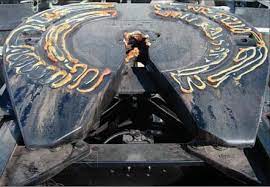
In short, ‘4.2m based on a 1250mm 5th wheel height’ a declaration that we are all familiar with, had been overlooked. The former figure was taken as absolute. The latter figure was assumed to apply.

In reality, the vehicle unit’s 5th wheel did not sit at 1250mm. It came from the factory with an axle-down height of 1285mm. This is the first issue. When the mid-lift axle is raised, the 5th wheel height is increased 50mm to 1335mm. The dye was cast. The true dimensions of this vehicle made a collision inexorable.

These two issues will be familiar to those of us who have driven this marque on mainland Europe, particularly in Holland. The golden rule being that, when pulling a fridge, even when empty, the mid lift must stay down at all times lest your Thermoking will be violently stripped of its crown.

All of this is to say that there are two issues which seem to largely elude many operators running mixed fleets:

  • That 5th wheels of this particular manufacturer tend to sit higher on the drive axle (above 1250mm).
  • Some 5th wheel heights can vary based on its thickness.
  • Some vehicles lift the drive axle airbags slightly when the lift axle is raised in order to avoid the lifted wheels dragging on the road (which may lead to ‘flat spots’ on the tyres over time).

This is not something which has been recognised by all operators. Many do, of course, but it is not something which features in most of the height awareness training I have seen. Emphasis is put on the driver assessing the height of the trailer (usually by looking at the height marker on it) and no or little consideration is given to the true height once hooked-in and running height is set. The unit’s contribution to the height is not factored.

Although there is only a maximum discrepancy of around 8cm in all of this, which may not be quite enough to destabilise a bridge on impact, it is more than enough to make contact with a bridge which will lead to a preliminary hearing which will then then lead to a discovery of other unrelated compliance oversights.

The operator in this particular case had, after the incident, measured the 5th wheel height for each one of its vehicles for both axle up and axle down and produced cards with that information, bespoke to the registration, which are kept in the vehicles.

In summary, beware the 1250mm standard. The prevalence of these type of vehicles, with the higher 5th wheel height, are such that 1250mm perhaps cannot said to be a standard any longer, but merely one of two options.

Featured

Carrier’s liability for excise duty under the CMR

JTI Polska Sp Zoo & Ors. -v- Jakubowski & Ors [2023] UKSC 19

This is a recent case of the Supreme Court in interpreting article 23.4 of the CMR 1956 which relates to charges to be paid by a carrier in respect of a total or partial loss of a load.

In short, the Supreme Court held that previous jurisprudence which interpreted “…and other charges incurred…” is still to be given a broad interpretation which includes, in this case, excise duties owed on cigarettes.

The CMR

This is not the first case note on JTI Polska with many interested law firms having published comment in the days after handing down. My addition, however, focuses on the road transport aspect in particular. Many lorry drivers and operators will be familiar with CMRs and the attention customs (sometimes as distinct from customers) pay to these documents.

Although the document is often referred to as ‘the CMR’, the paperwork itself is properly called the consignment note. The CMR is the convention which regulates the contents and effect of a consignment note. The Convention on the Contract for the International Carriage of Goods by Road is a UN convention and has 58 signatories which include each of the EU member states and the UK.

Its purpose is to standardise the contracts for carriage of goods across borders and to define the carrier’s or sub-contractor’s liability when operating cross-border where many other legal requirements change. It applies to every contract for the commercial carriage of goods by road when the destination for the goods is in a different country.

The provisions of the convention regularise the liabilities between the sender and carrier such as article 7 which tells us that the sender is responsible for loss suffered by the carrier for an incorrectly particularised consignment note (description and weight of goods etc.), or article 17(4) which relieves the carrier of liability when the damage of the load arises from, for example, the use of an unsheeted trailer when the use of such had been expressly agreed in the consignment note.

It does not apply to goods between the four jurisdictions of the UK and the Republic of Ireland.

The limitation period under the CMR is rather shorter at one year.

JTI Polska facts

 JTI, the appellant, is a carrier based in Poland. The respondents, Jakubowski and others are part of Japan Tobacco International (a group of companies who buy and sell tobacco products).

In March 2019, JTI collected a load of cigarettes from Gostkow, Poland to bring to Crewe in the UK. Upon reaching the UK, the driver parked at Clacket Lane services on the M25. In a lamentably familiar scenario, the curtain of the vehicle was cut and 289 cases of cigarettes were stolen while the driver slept. The value of the goods stolen (not including tax) was £72,512. The tax owed was £449,557. HMRC demanded payment of this excise duty and it was paid by the 2nd respondent shortly after. This amount was then sought from JTI under the terms of the CMR, article 23.4 in particular.

The legal argument

JTI argued that article 23.4 ought to be interpreted in the narrow sense which would exclude the carrier’s liability for excise duty for goods stolen from its vehicle.

The respondents argued that a decision from the House of Lords from 1978, Buchanan, which also interpreted article 23.4, should be followed. In Buchanan, whisky bound for Iran (in the days when such trips took place by road), was stolen from the vehicle near London. It was held by the House of Lords on a 3/2 split that the words ‘in respect of’ in article 23.4 were wide enough to include the way in which goods were carried, miscarried or lost and that the excise duty was accordingly recoverable from the carrier. Lord Wilberforce, who gave the leading judgment, said “the carriers’ duty was to carry the whiskey to the port of embarkation – their failure to do so might, or might not, bring a charge into existence. But if it did, I think it right to say that the charge was in respect of the carriage.”

From this, the facts of JTI are essentially on all fours with the binding decision of Buchanan. However, the Supreme Court was invited to overturn Buchanan for the following reasons:

  • academic criticism of Buchanan;
  • obiter comments from other cases such as from the Court of Appeal;
  • uncertainty in the law;
  • the use of a narrow approach in a similar regime for railway carriage (CIM); and
  • a narrow interpretation being used in other countries such as Germany and the Netherlands.

The appellants, in seeking to overturn a decision from the House of Lords had to persuade the Supreme Court, in line with the Practice Statement of 1966, that Buchanan was untenable or manifestly wrong and that the Supreme Court must take the opportunity to correct this.

Decision

The Supreme court in a unanimous seven-justice panel put pay to any uncertainty in the law (compared with 3/2 in Buchanan) by affirming Buchanan and the broad approach.

In essence, the conduct of the carriage will determine liability of excise duty under article 23.4.

Among many of the reasons given by Lord Hamblen (with whom the other six justices agree), two, in my opinion are particularly important:

  1. in a situation where one of the parties is liable for the payment of excise duty (such as in the case of theft from the vehicle), it is not clear why it ought to be the entirely innocent sender of the goods who has no control of the vehicle; and
  2. if there is some confusion from Buchanan due to academic criticism, obiter criticism from the Court of Appeal and a narrow approach used in some other countries, then the overturning of Buchanan is not going to resolve that alleged lack of clarity.

Note to hauliers

As I invariably attempt to do in these posts, how this relates to individual hauliers is important. Beyond glib suggestions such as a preference for theft from a carrier’s vehicle to occur in Germany, there is not much from this decision which ought to change the approach of carriers or lorry drivers save for a reemphasis of anti-theft procedures.

The decision has confirmed, beyond doubt, that the carrier will be liable for excise duty if goods are stolen from their vehicle. There is no question that the sender will be solely liable for these charges.

Featured

Regulation Hammers and Nails with Airbrakes

The Department of Transport is consulting on a change to the GB Highway Code. The changes proposed seek to establish a ‘hierarchy of road users’. In essence, the largest vehicles will bear most responsibility for road users smaller than them. HGV drivers will owe the greatest duty of care to all road users while pedestrians will owe no duty.

This concept is not surprising, particularly in GB where Traffic Commissioners can suspend the vocational licence of a HGV/PSV driver for serious conduct breaches. In practice, ‘professional’ drivers will always be held to a higher standard by police, DVSA and, in the worst cases, juries.

Amendments to the Highway Code are rarely controversial. However, the proposals from the DfT risk striking a balance of road safety too far in one direction. The concept of the hierarchy is reasonable, how the Highway Code seeks to operationalise it is not.

The mischief these proposals seek to cure is HGV turning-left cases when a cyclist is kerbside. These proposals are an incredibly inefficient way of doing this. They attempt to fix the problem by adding onto the existing duty of care of motorists. The HGV driver duty of care is already at saturation point; but when you have a regulation hammer, everything with airbrakes looks like a nail.

This is a 67-page proposal, so below is merely a summary of the salient points and my responses to DfT. I refer to HGVs throughout – but the proposals make no such distinction, they apply to all motor vehicles. This will not effect the Code in Northern Ireland – only GB. However, if passed, it is likely that Northern Ireland will follow.

New Proposed Rules

Drivers should not make cyclists stop or swerve when turning into a junction in the same way as you would not turn across the path of another motor vehicle.

The comparison between cyclists and motor vehicles here is at best strained, and at worst, illogical. If a HGV is turning left, it is inevitable that the traffic behind will stop until the manoeuvre is complete. This is because cars do not ordinarily overtake down the nearside when a vehicle is turning left.

This rule would make sense if it applied to cases where the vehicle has overtaken the cyclist and then almost immediately turns left, cutting the cyclist off. However, such a rule is mentioned separately in the document and so does not apply to such situations. It would also make sense if cyclists were not permitted to pass a vehicle on its nearside.

As such, the HGV will be expected to sit at the junction with its left indicator on whilst cyclists continued on. The HGV will only be permitted to start the manoeuvre when doing so will not cause a cyclist to stop.

We must also question at what distance does the approaching cyclist have to be before the turn can be executed in compliance with this rule, bearing in mind that HGVs may block an entire road for some time in order to complete the manoeuvre.

Whilst cycling on busy roads with vehicles moving faster than you…keeping at least 0.5m away from the kerb edge.

This rule may offer a solution to the problem of turning left HGV -v- cyclist collisions in city centres. If the cyclist should stay 0.5 metres from the kerb, the cyclist will be encouraged to only overtake on the righthand side or keep with the flow of the traffic in the middle of the lane.

At junctions with no separate cyclist facilities, it is recommended that you proceed as if you were driving a motor vehicle. Position yourself in the centre of your chosen lane…

This is a sensible distinction to make. Where there is a cycle lane, it is only fair that vehicles stop to let cyclists in that lane continue straight. It takes little cognitive bandwidth to check that a cycle lane is empty. It is another thing to constantly check mirrors in case a cyclist has been slipstreaming you for the past mile and appears out of nowhere. It is no secret that in busy city centres, cyclists tend to weave in and out of slow or stationary traffic (as is their right to do), but this makes them very difficult to spot.

That being said, there is a strong argument that even with cycle lanes, cyclists still ought to stay back from vehicles who appear to intend to turn left.

If you are going straight ahead at a junction, you have priority over traffic waiting to turn into or out of the side road… Be particularly careful alongside lorries as their drivers may find it difficult to see you.

This is dangerously worded. A junction with motor traffic and cyclists is precarious at the best of times. Explicitly giving cyclists priority for going straight when vehicles are turning risks intransigence from some. These situations require common sense and mild-mannered prudence; not a blank cheque for one group of road users to bomb on regardless of the clear intentions of others.

Asking cyclists to be careful around large vehicles is inadequate. HGV drivers have six mirrors, a windscreen and possibly a digital screen showing external cameras to monitor. It is eminently easier for the cyclist to spot danger than the HGV driver. Drivers of such vehicles are already saturated with monitoring duties; the cyclist has virtually none. It may be legally valid to force drivers to give way to cyclists, but it is unlikely to make much difference to the amount of deaths at junctions.     

Cyclists may pass slower moving or stationary traffic on their right or left, including at the approach to junctions, but are advised to exercise caution when doing so.

Again, advising cyclists to exercise caution is valid, but the Code must go further. It must state that they should give way to motor vehicles which appear to intend to turn. However, rule 72 will remain which states ‘do not ride on the inside of vehicles signalling or slowing down to turn left’ – this must be emphasised in the new Code.

Implication of these proposals

None of the above are predicated on ‘must’ or ‘must not’; all of them are ‘should’ or ‘should not’ which means they are advisory and not an offence. However, under section 38(7) of the Road Traffic Act 1988, a breach of any rule in the Code can be used as evidence ‘tending to establish or negative any liability which is in question in those proceedings’. There is a real risk, if the above proposals are authorised by the Secretary of State, that there will be a de facto presumption of liability against drivers in turning left HGV -v- cyclist collisions.

The new Code may well make it easier for the police to charge and for the courts to convict drivers in these turning left cases, but it is unlikely to actually reduce the amount of them.

These proposals are a missed opportunity by DfT to implement an effective solution to save the lives of many cyclists.

Featured

Hitting the duty of care in your blindspot – Fresnel lenses in court.

Bonsor v Bio Collectors Ltd [2020] EWHC 669 (QB)

Summary

  • No duty on an operator to fit a Fresnel lens.
  • Issues with evidence – this could change in time with better argued evidence.


This is a personal injury Queen’s Bench case from England and Wales. Although it does not change the law, there is an interesting discussion on the duty of care owed by operators of HGVs in relation to the fitting of Fresnel lenses.

As far as I can tell, this is the first reported case addressing the issue of Fresnel lenses.


Facts

A class II Renault Premium was turning left off a road in the centre of London. The driver did not see the claimant who was crossing the road at the time, collided with her and caused significant injuries.


Issues at trial

Issues of primary liability of the defendant and contributory negligence of the claimant were explored. However, specifically for us in the transport industry, expert evidence and submissions were made in relation to establishing a specific duty of care owed by the defendant operator to the claimant to fit a Fresnel lens which could have prevented the accident.

Peter Marquand (sitting as Deputy High Court Judge) held that, as was accepted by both parties, there is no legislative requirement to fit such lenses. Additionally, at [95], the claimant had failed in discharging the burden of proving the existence of such a duty.


Why should operators take note?

This case merely confirms what we already know about Fresnel lenses – the Health and Safety Executive, Transport for London and FORS &c. recommend them but there is no statutory or regulatory requirement for them.

Why the court decided there was no duty to fit a Fresnel lens:

  • substantial reliance on a report which did not deal with Renault Premium cabs;
  • the claimant’s expert had never actually fitted a Fresnel lens;
  • no detailed evidence on the efficacy of the lenses was presented;
  • there was no evidence as to the cost of such a lens;
  • neither expert knew much about where or how to fit a Fresnel lens in a lorry; and
  • overall, the state of evidence on Fresnel lenses was ‘very unsatisfactory’.

This case, however, leaves open the possibility of an operator being fixed with such a duty of care if:

  • the operator had foreseen the risk of an accident in the absence of a Fresnel lens;
  • the court decides it would be fair, just and reasonable to impose such a duty;
  • the fitting of the lens would have, on balance, prevented the accident or led to a less serious outcome; and
  • the cost of doing so would not be disproportionate (the ‘magnitude of risk’).

Operators and their insurers should note that claimants will use this case as a template of how not to go about establishing a duty of care in relation to the fitting of Fresnel lenses – this will not be the last time this argument will be attempted.

I have in mind the many left-hookers operated by UK/Ire hauliers and blind-side lane-changing collisions but also the HGVs that operate mainly in city and town centres. There may not be a statutory requirement to fit them, but a court may decide that it would have been reasonable for you to fit one if it could have prevented an easily avoidable accident.


Featured

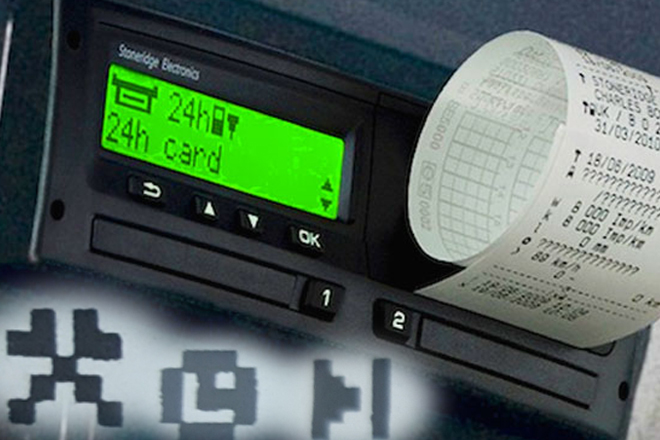
Sars-Cov-2 Relaxation of GB tachograph enforcement

Article 14(2) of Regulation 561/2006


Temporary relaxation of the enforcement of the drivers’ hours rules: delivery of essential items to retailers


A number of people have informally asked me about this possibility over the past few days and, as expected, the UK government has granted a temporary exception to the enforcement of Articles 6-9. This, as mandated by paragraph 2, can only last for 30 days without formal approval from the Commission under paragraph 1.

This is to be viewed as a forbearance promised by the Department for Transport in relation to the enforcement of tachograph rules up to the limits specified below. Any rules not addressed are not relaxed and remain fully enforceable.


The Sars-Cov-2 exception in the UK

Identical exceptions have been issued by the Department for Transport in GB and by the Department of Infrastructure for NI.


  1. Who does the exception apply to?

Drivers involved in the delivery of:

  • Food
  • Personal care
  • Household paper
  • Cleaning products
  • Over-the-counter pharmaceuticals


  1. Type of movement of the above goods

The exception only applies when the above goods are moved:

  • From distribution centres to stores
  • From manufacturer/supplier to store and RDC (this includes bringing empties back)
  • Between distribution centres and trunking hub
  • Transport depot to stores.

Therefore, it does not include the delivery of goods to end-user consumers.


  1. Duration of exception

This will cover shifts between 0001 today (Wednesday 18th) and 2359 April 16th. After this, formal approval must be granted by the Commission.


  1. The substance of the exception

The exception is not carte blanche to ‘keep ‘er lit’ – please note the following:

  1. Daily drive limit to 11 hours (instead of 9s and 10s);
  2. Minimum daily rest down to 9 hours (instead of being limited to 3 9s per week);
  3. 96 hours of driving over the fortnight;
  4. Instead of taking weekly rest after six 24-hour periods, you can start it a full week after your first shift (so 7 shifts instead of 6);
    1. However, one regular and one reduced will still be required in a fortnight.
  5. 5 hours driving allowed before taking a 45.


The government will not allow a driver to avail of 11 hours driving if they intend to do 7 shifts.


Drivers must take a printout at the end of every shift citing the reason for the non-compliance (simply write ‘covid-19 exception rules’), date and sign.


Observations

This is not a particularly far-reaching exception but may be of significant assistance to larger companies who are best placed to utilise every minute of driver time in their networks.


As mentioned above, this ‘relaxation’ of tachograph enforcement does not mean the rules are entirely suspended. Many drivers who I have been speaking to appear to be under this impression. The increases are quite modest so do beware.


As for the rule about not availing of the increase drive time and weekly shift extension; this appears to be ripe for confusion. It is not clear if you could extend to 10 hours driving every day for 7 days or if you if you must decide between doing 7 shifts but only extending drive time to 10 hours twice per week in accordance with Article 6(1) – I am seeking clarification from the Department on this.


Other Article 14 exceptions in place

By doing this, the UK joins Bulgaria, Romania, Spain, Sweden and Denmark in relaxing tachograph rules due to the Covid-19 outbreak.


These new exceptions will sit alongside a raft of similar exceptions from the end of 2019 in relation to supply in the LPG/LNG in the EU.


Featured

The shifting winds of burdens – a note for practitioners and HGV/PSV operators – Woodhouse v Lochs and Glens (Transport) Ltd.

Woodhouse v Lochs and Glens (Transport) Ltd. [2019] CSOH 105

This recent case from the Outer House in Scotland warrants a quick summary for both lawyers and operators/drivers.

It goes without saying that Scottish law is not easily translatable to that of this jurisdiction, but the reasoning of Lord Glennie may be of some persuasion in borderline cases.

Facts.

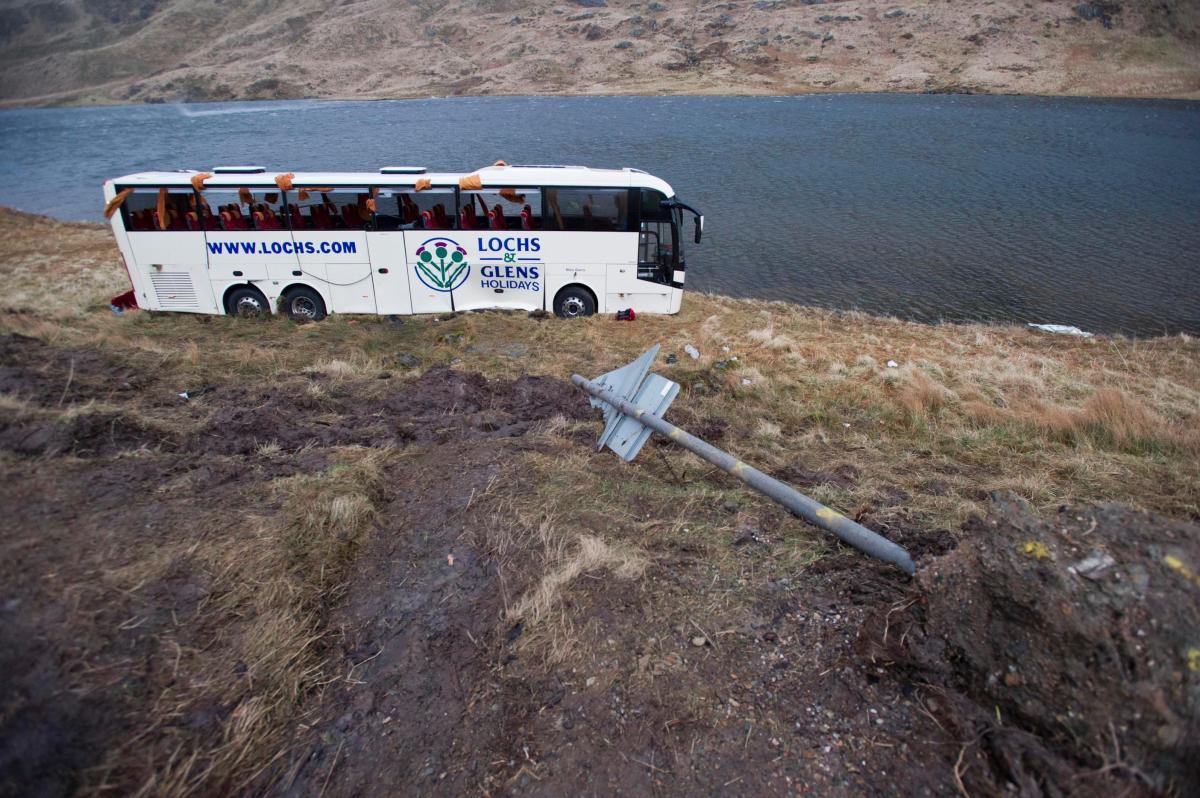
The pursuer (plaintiff) was a passenger on the bus of the defender (defendant) which came off an A-road in the Scotland highlands, rolling once and coming to rest quite a distance from the road with 51 passengers. The driver claimed that high winds pushed the bus over the verge.

Issues at trial.

The case is largely a non-descript trial of an RTA-related PI; but an argument raised by the plaintiff is noteworthy on account of its scarcity in the law reports.

It had been argued that a reverse burden ought to apply – suspending the normal common law rule of ‘he who asserts must prove’.


Plaintiff’s submissions

Mr Milligan QC suggested that the fact a well-maintained and properly driven bus came off the road gives rise to a prima facie inference of negligence. The suggestion of adverse weather conditions does not avail the defendant of a rebuttal of this – drivers are under a duty to drive accordingly to the weather conditions. 


          Defendant’s submissions

 Mr Primrose QC retorted that the reverse burden and res ipsa loquitur only applied where ‘all the factors contributing to the accident were within the control of the defenders’ and ‘in circumstances where the pursuer did not know and could not know the cause of the accident’.

Decision.

At [29], Lord Glennie cited part of his decision in Morton v West Lothian Council (2006):

“The justification for such a shift is obvious; not only are all the circumstances under the control of the defenders but the defender will have the means of knowing what occurred. The shift is necessary to avoid the denial of justice to those whose rights depend on facts incapable of proof by them… the onus shifts to the defender to prove, at the least, the existence of other facts or circumstances which might have caused the accident without his negligence”


In relation to the facts of the instant case, at [30], Lord Glennie decided that

“everything relevant to the accident involves matters within their knowledge and control… It is theoretically possible for the pursuer to find out what the defenders have done and not done in relevant respects, but in reality the rules of pleading and recovery of documents mean that there are likely to be gaps in what the pursuer can explore with a view to pinpointing where the fault lies.”

As such, he held that Lochs and Glens (Transport) Ltd were indeed on the wrong side of res ipsa. In any event, however, they easily discharged this evidential burden.

I proffer two points to this. First, this again marks a further liberalisation of the rules of res ipsa in comparison with the other two jurisdictions, but as mentioned at the beginning, such arguments may arise in a persuasive manner given Lochs and Glens (Transport) Ltd is now one of the most authoritative cases on the matter in Scots law.

Secondly, it appears that Lord Glennie’s decision in Lochs and Glens but also from Morton are driven by concerns of equality of arms in litigation – or to put it in less guarded terms, it would perhaps be the best explanation for it. If we examine the reasoning at [30], it is difficult to see quite how everything relevant to the accident is within the knowledge of the defender. The obvious retort to this point is the adequacy of litigation pleadings and discovery; however, the ‘gaps’ in such procedures allegedly create a potential injustice to pursuers.

That being said, provided the burden can be discharged by simply offering an explanation for the accident which does not include negligence of the defendant, then perhaps the shift is negligible to the point of becoming illusory.


A word of warning to operators and drivers.

Given the potential for substantial damages, this case was vigorously pursued and defended with an impressive amount of detail and the engagement of experts not usually to be seen in RTA PI actions. The following topics were investigated:

  1. Condition of the coach
  2. Weight distribution of the coach
  3. Stop at the lay by (use of tachograph downloads)
  4. Speed
  5. Reaction time

There is no need for me to explain each of the above. But as always, these reported cases send warning shots across the bows of operators – documentation needs to be completed to virtual perfection. For drivers, momentary absent mindedness may be overlooked 95% of the time, but when a gust of wind comes along and you are on the line for causing injury, loss and damage to 51 people, small infringements are magnified.

There is also a word of warning for operators on encouraging or even permitting drivers of high-sided vehicles to continue in adverse weather conditions. My next blog may shed some light on that topic!

Death by dangerous driving of a HGV – categorisation and disqualifications in the Court of Appeal

Outline

This case considered the categorisation of culpability in cases of causing death by dangerous driving. Disqualification periods when an offender receives an immediate custodial sentence is also briefly addressed.

Facts

In R -v- Meczynski [2005] EWCA Crim 246, the Court of Appeal considered an application by the Solicitor General to refer a sentence for being unduly lenient.

Mr Meczynski, on 20th October 2022, had been driving an R450 artic through Kidlington. He approached a set of traffic lights at a speed of 29mph. As the lights turned from green to amber and then to red, Mrs Grace crossed ahead of the oncoming lorry driven by Mr Meczynski.

The lights had changed from green to amber 11 seconds before braking had commenced. The light had been on red for eight seconds before braking commenced. Mrs Grace had been crossing the road for five seconds before braking began. Mr Meczynski did not apply the brakes until one second before impact. Mrs Grace died at the scene.

Mr Meczynski pleaded guilty at the PTPH.

He was sentenced, after 25% credit, to 45 months’ immediate custody. The sentencing judge considered his culpability to be high category C. As with causing death by careless driving, harm is not separately measured.

Leave application

The basis of the application for leave to refer the sentence for being unduly lenient was that the sentencing judge had made an error in sentencing according to culpability C and ought to have sentenced the offender under culpability B.

Decision of the Court of Appeal

Leave was refused. Sentencing Mr Meczynski within culpability B would have made little difference to his being sentenced -as he was- within culpability C. It would have been low B which, considering the ranges, would have been within the Venn diagram of high C. In any event, a starting point of five years was not unduly lenient.

There was a slight miscalculation by the sentencing judge in the extension of the disqualification for time spent in custody which was short by half a month. To this extent only, the Court of Appeal granted leave to refer the disqualification and imposed the extra half a month disqualification to the five-year disqualification imposed by the court.

Discussion

The categorisation of culpability for dangerous driving causing death is profoundly important in the sentencing exercise.[1] The starting points are:

  • A – 12 years
  • B – 6 years
  • C – 3 years.

In this case the sentencing judge decided that the dangerous failure to stop at a red light was not culpability B but was culpability C. Factors of the type of vehicle driven (a HGV) and the fact that it happened in a residential area were such that he was to be sentenced according to high culpability C (the high range running to five years).  After a 25% reduction for credit, the final sentence was 45 months which is not suspendable.

Cases involving a HGV automatically attract two aggravating features: driving a goods vehicle and driving for a commercial purpose (unless the driver is driving the vehicle for a truck show or other non-commercial reasons). The hierarchy of road users in the Highway Code will also act to place the culpability of a HGV-driving defendant at a slightly higher level.

This case is again one of many where the Court of Appeal is left to correct a mistake in determining the length of disqualification under section 35A of the Road Traffic Offenders Act 1988. This appears to be more common than not. Advocates should be careful to bring section 35A to a sentencing court’s attention and that the extension is mandatory and not discretionary.  


[1] https://www.sentencingcouncil.org.uk/offences/crown-court/item/causing-death-by-dangerous-driving/

Upper Tribunal decisions on PTR letters

Some conflict in the case law on propose to revoke letters

Man proposes, but the Upper Tribunal disposes

Sir Edwin Landseer’s depiction of Franklin’s lost expedition in 1845 to make tracks through the Northwest passage and the title ‘Man proposes, God disposes’ is perhaps apt for a potential conflict of jurisprudence on propose to revoke letters of late.

Click-bate and melodramatics aside, there are four cases relevant here but I will take two as the headlines; one per polar bear. Ashro being one and Veltrans the other.

In sum, we have a new line of case law which forces more detailed and less formalistic consideration of operator’s responses to PTRs. One recent case which had the benefit of submissions from the Secretary of State, did not address the matter at all and deemed that an operator must be more forthright and explicit in their request to have a public inquiry.

Propose to revoke [“PTR”] letters are a frequently-used weapon in the Traffic Commissioner and TRU arsenal. When the regulator has grounds to believe that a key element of transport compliance is not being observed, they can send a PTR to the operator. If the operator does not request a public inquiry, or make satisfactory representations, the licence will automatically be revoked.

Many operators are fine with this. Either they can see the writing on the wall and know that a public inquiry would be futile or the licence is no longer being used and they have not quite got around to surrendering it before the renewal date.

However, a significant number of operators are not enamoured by the sight of a PTR letter. Many public inquires begin on account of an operator responding to a PTR by requesting a public inquiry.

Very briefly, the legal framework behind this is:

  1. Section 27 of the Goods Vehicles (Licensing of Operators) Act 1995 requires a traffic commissioner to direct that a licence is revoked if it appears that the operator no longer satisfies a core requirement of holding a licence.
  • Section 29 tells us that a traffic commissioner cannot direct that a licence is revoked under section 27 without first holding a public inquiry if the operator requests one.

This sounds rather sensible and straightforward: ‘I think you are in breach of a central requirement for an operator’s licence. I will revoke this licence unless you ask for a hearing or give a good explanation.’

However, issues do often arise. Time and again we see operators who do not give such letters the serious attention they demand or they reply to the letter in a way which seeks to rebut the premise of the findings but not to formally request a public inquiry.

The Upper Tribunal has handed down two decisions recently which deal with PTR issues.

The first was Ashro Shipping Ltd [2024] UKUT 425 (AAC).

In this case the traffic commissioner had reason to believe that the standard operator’s licence no longer had a transport manager. This was confirmed by a belated response from the operator confirming that their transport manager had left. The traffic commissioner issued a PTR which had not been responded to within the 21 days mandated by section 27 and the letter itself.

The operator did respond after 24 days (three days late) and explained the reasons for responding late and that steps are afoot to get a new transport manager.

However, the traffic commissioner responded soon after to say that the operator should have been contactable but the licence is to be revoked immediately due to having no transport manager.

On appeal, the Upper Tribunal appeared to have had three concerns with the PTR letter:

  1. Insufficient consideration given to the previously positive regulatory history of the operator.
  • Reasons should have been given for the refusal of a period of grace.
  • Unfair and inaccurate description of the purpose of a public inquiry.

Taking those in turn:

The consideration of previous regulatory history in dealing with responses to a PTR appears to be a new addition to the jurisprudence on this narrow matter. This is dealt with at [21] of the judgment where it is held that [consideration of previous regulatory history has] to be a relevant consideration before concluding that this was an operator that deserved to be put out of business. It appears that the Bryan Haulage No.2 question has now been inserted into decisions to revoke after a PTR letter.

However, a curious feature of this matter is that the OTC’s response had appeared to focus on the fact that the operator did not respond on time as opposed to a considered decision on whether to grant a period of grace (dealt with below). Yet the fact is that the reason for revocation was a failure to have a transport manager. As such, it appears that the Bryan Haulage No.2 question will need to be answered in every decision to revoke after a non-response to a PTR letter. Although the Secretary of State was not added as respondent to this appeal, it would be interesting to imagine what submissions they would have made on this point as it extends the considerations to be made by the traffic commissioner. There is now a balancing exercise added to what was often considered to be a power requiring no balance.

That said, it is often our experience as practitioners in this area that the traffic commissioners are more than willing to engage after meaningful responses are given to PTR letters and, in practice, the balancing exercise is often done in any event.

As for the second point, reasons to be given for refusal to grant a period of grace, this again appears to be a new addition to the operation of PTR letters. At [18] of the judgment it is said that

“…cases arise in which the refusal to grant a period of grace is an integral part of the decision to revoke an operator’s licence. In such cases, we consider that the Traffic Commissioner’s obligation to provide sufficient reasons for a licence revocation decision cannot be discharged unless some explanation is given for the refusal to grant a period of grace.”

This is important. Periods of grace can be applied for where there has been a departure of a transport manager or the operator is in shallow financial waters and financial standing is an issue. It is unlikely to apply where there are issues with good repute.

Decisions to refuse a period of grace are not appealable per se. It is therefore interesting to see how this judgment will impact on operators who receive a PTR letter, reply asking for a period of grace and are then refused one by the traffic commissioner after detailed consideration.

Another way of looking at this, in my submission, which had not been suggested by the appellant, is that the request for a period of grace is tantamount to a request for public inquiry. There are two options available to an operator upon receiving a PTR letter: make representations or request a public inquiry. Surely the request for a period of grace is the greatest indication that an operator wishes to continue their licence and, if refused, a public inquiry ought to be called.

This often catches operators out. Perhaps it is best that any response to a PTR letter, whatever form of words it takes besides ‘please revoke my licence’, should lead to the calling of a public inquiry. A presumption in favour of an inquiry if you will.

The third reason given by the Upper Tribunal is also interesting. The PTR letter in the instant case tells the operator that a public inquiry can be requested “…in order [for you] to offer further evidence as to why the licence should not be revoked.” The judgment at [22] deemed this to be an “…inaccurate and unduly restrictive, description of an inquiry…” and it was “…unfair because it was built on a foundation that undermined procedural protections that Parliament has seen fit to build into the licence-revocation process.”

One other way of looking at this, which had not been raised by the appellant, is that the description (or misdescription) of the public inquiry suggested very subtly -and perhaps unintentionally- a reverse burden arising from a PTR-prompted public inquiry. The traffic commissioner in such public inquiries will have the burden of proof and not the operator. The opposite of course is true of application public inquiries.

One final interesting point made by the Upper Tribunal is that the late response by the operator matters not. There is a 21-day limit set by section 27 for representations to be made. The offer of a public inquiry is, unhelpfully as always with transport legislation, in a different section: section 29. It does not set a time limit for the operator to request a public inquiry. Although the judgment referred to the PTR setting no time limit a request for an inquiry, one wonders whether in the age of Ashro Shipping PTRs, a request for a public inquiry can made once the traffic commissioner decides to revoke the licence despite representations being made.

The second case is Veltrans Green Ltd -v- Secretary of State for Transport [2024] UKUT 444 (AAC). This was a much more contested and detailed affair. There is an interesting discussion of a change in circumstances where it becomes apparent to the OTC that the operating centre perhaps should not have been approved at the application stage.

However, the decision is more important for the purposes of this article for what is speaks of in terms of the PTR letter in that case. Unlike the Ashro PTR response (where the operator merely asked for more time), in Veltrans, the operator said inter alia:

“Please consider allowing us a chance to prove these were not intentional errors but rather misunderstandings, especially regarding the suitability of the operating centre.”

At [41], the Upper Tribunal decided that this could not reasonably be read to contain a request for a public inquiry. It is axiomatic that each case turns on its own facts, but this appears to be at odds with the decision of Direct Service Logistics UK Ltd [2024] UKUT 386 (AAC) at [69] which has a handing down date of 22/11/24 which was before the hearing of Veltrans. The judgment of Veltrans makes no reference to Direct Service Logistics. This will need to be resolved in future. One should hope that the Upper Tribunal prefer the decision of Direct Service Logistics which is a more fair reflection of the reality of many operators who, in my experience, often fail to grasp the importance of requesting a public inquiry until it is too late. If ‘allowing us a chance to prove’ is not an unsophisticated and indirect request for an inquiry it is difficult to see what could be.

That point aside, it is interesting to note that the PTR letter said the following:

“…the traffic commissioner in accordance with section 29(1) offers you the opportunity to request a public inquiry in order to offer further evidence as to why the licence should not be revoked.”

This is same wording that the Upper Tribunal in Ashro deemed to be unfair and inaccurate. We therefore appear to have two cases not entirely aligned with each other on this narrow but important point.  

The Ashro hearing was heard on 03/12/24 and judgment handed down on 12/12/24. Veltrans was heard on 10/12/24 with handing down on 30/12/24. Both benches were differently constituted. Neither hearing had been aware of the other ruling therefore. Many of the criticisms of the PTR in Ashro had been made by the same bench in the case of Autoworx Recovery Ltd [2024] UKUT 421 (AAC). I assume one case was heard in the morning and the other in the afternoon.

The wording of the PTR letter and the suggested reverse burden was not addressed in Veltrans and the point was not taken. It is likely that Ashro and Autoworx will be followed. The Upper Tribunal was quite emphatic on the point. However, like Veltrans, the point was not subject to adversarial argument.

First Court of Appeal decision under new Clandestine Entrant regulations

KLG Trucking SRL -v- SSHD [2024] EWCA Civ 737

A long-awaited decision from the Court of Appeal under the new Carriers Liability (amendment) Regulations 2023 has been handed down.

The key findings relate to the following:

[24] The word “afterwards” in regulations 2E(2) and 2E(3) refers to the relevant action rather than to the journey. In other words, the owner/hirer must make a written record as soon as practicable after ensuring that an action has been taken or a sign has been noted.

[25] The owner/hirer obligations and those of the driver can be satisfied with a single document. There is no need to have one record for the owner/hirer and a separate one for the driver.

[28] Regulation 2C(2) requires the driver to perform the “standard checks” set out in the schedule to the 2002 regulations “during each occasion the vehicle is parked during a journey.” No such obligation is, however, imposed on the owner/hirer.

[30] An owner/hirer must ensure that steps are taken as specified in regulation 2B before a vehicle embarks on a journey, not whenever a new leg of the journey is to begin.

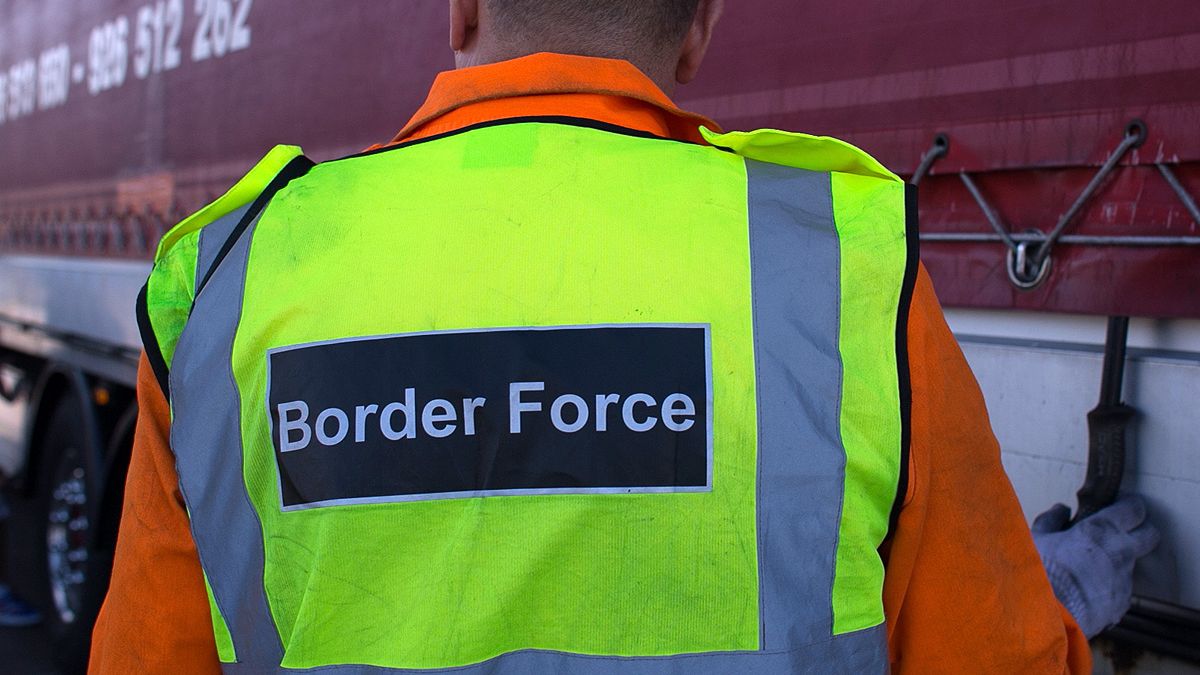
[39]-[43] Although these paragraphs are quite fact-specific to KLG, it helps tighten up what has been a rather liberal approach by Border Force in finding in the IS11 forms that the owner/hirer has breached this regulation.

[49] The mere fact that a vehicle owner has not been shown to have failed to comply with the 2002 regulations provides a good reason either for declining to impose any penalty or for imposing one at a level lower than indicated by the Penalty Code. Nexways (although a county court decision) is not to be followed.

Transhipping the Buck – Complicity of Operators in Smuggling and Restoration under CEMA 1979

Short Summary:

  • Two of the most recent cases dealing with the complicity of operators in smuggling sit rather uncomfortably together. 
  • Although complicity is not a statutory or even common law term under CEMA 1979, it is of such importance in these cases that it ought to be more directly addressed.
  • Border Force are setting great store by the previous conduct of drivers in smuggling cases. As such, there should be a disclosure scheme set up by the Border Force which can be used by operators to check that drivers have no previous adverse encounters. 
  • Border Force policy should be extended to include a category of reckless or negligent operators. This will occupy the middle ground between entirely innocent operators and those who are clearly complicit. 
  • Border Force appear to be deciding these restoration cases reasonably and prudently. However, consistency and predictability in law is, constitutionally at least, of the utmost importance. Either formal guidance should be published, or judicial or legislative clarification of the test to be used in determining complicity will be needed.

I. The Issue

A recent case of the Upper Tribunal concerning the forfeiture of a HGV which was involved in smuggling cigarettes into the UK drew attention to a potential conflict of authorities in the definition of complicity under the Border Force’s policy of vehicle restoration under their discretion to do so under section 152 of the Customs and Excise Management Act 1979 (CEMA). 

The Upper Tribunal (UT) circumnavigated this difficulty by distinguishing one of the authorities and ‘preferring’ the other. This issue will therefore arise at some stage again and calls for a short article due to issues of consistency and predictability of the law.

The legislative framework around forfeiting a vehicle, challenging that forfeiture or requesting restoration is spread across a number of provisions in various Acts. This is outlined at the end of the article.

II. Border Force Policy for Restoring Forfeited Vehicles.

Of the various statutory provisions listed infra, the most extensive – by some distance – is section 152 of CEMA. Subject to an appeal and up to the threshold of Wednesbury, the Border Force may make any conditions they think proper. This only applies if they exercise their discretion to restore the vehicle. This author will not be the first to observe how extensive a power this is,[1] compounded by the absence of any statutory requirement to publish and be bound by policy.

Regrettably, the Border Force does not publish the policy document which they use in deciding the fate of vehicles under section 152(b) of CEMA.[2] However, various decisions of the FTT and the Upper Tribunal (UT) cite sections of it. The policy section on complicity between operators and drivers appears to be as follows:

B. If the operator provides evidence satisfying Border Force that the driver, but not the operator, is responsible for or complicit in the smuggling attempt then:

(1)  If the operator also provides evidence satisfying Border Force that the operator took reasonable steps to prevent drivers smuggling, then the vehicle will normally be restored free of change unless:

a.     The same driver is involved (working for the same operator) on a second or subsequent occasion in which case the vehicle will normally be restored for 100% of the revenue involved in the smuggling attempt (or for the trade value of the vehicle if lower) except that

b.     If the second or subsequent occasion occurs within 12 months of the first, the vehicle will not normally be restored.

(2)  Otherwise,

a.     On the first occasion the vehicle will normally be restored for 100% of the revenue involved in the smuggling attempt (or for the trade value of the vehicle if lower).

b.     On a second or subsequent occasion the vehicle will not normally be restored.

From this extract, a number of points can be distilled:

1.     When a vehicle is forfeited, there is, in essence, a rebuttable presumption (the authorities state that it is merely a reverse burden) that the operator was either responsible or complicit.

2.     It is the operator, in rebutting this presumption, who must provide evidence that the driver is responsible for the smuggling.

3.     Once this presumption has been rebutted, the operator must then prove that it took reasonable steps to prevent the driver from smuggling. 

III. Complicity of operators.

Perhaps unsurprisingly, the exercise of the section 152 discretion has proven to be fertile ground for litigation by operators seeking to get their vehicles restored for a reduced amount; or indeed get them back at all.[3] Central to these cases are whether they can prove to the Border Force that they were not complicit in the smuggling. 

A prudent and responsible operator is expected to make certain checks to avoid situations where drivers can go rouge and engage in smuggling. These include requesting references from the driver’s previous employers, checking collection addresses and ensuring customers are reputable, checking delivery addresses and ensuring that company is reputable, keeping track of drivers’ hours at all times in combination with tracker data to ensure drivers are where they are meant to be at certain times, regularly checking tractor units and trailers to check that they have not been fitted with compartments suitable for smuggling etc. 

Much like the oft-maligned bus service, three significant cases have come along at almost at once. In PHU Greg-Car[4]the Upper Tribunal (in hearing an appeal from a decision of the FTT) held that a failure to perform reasonable checks does not, of itself, demonstrate complicity in smuggling.[5] A failure to conduct such checks could be explained by incompetence, inexperience, ignorance, laziness or lack of time etc.[6] At first instance, the FTT agreed with the reviewing officer that the fact PHU Greg-Car did not perform reasonable checks was sufficient to say that, on balance, they were complicit. The decision of the FTT was set aside and the matter remitted to the FTT.

A little over one month later, a differently constituted Upper Tribunal heard the appeal of Everpol.[7] At first instance, the FTT decided that a failure to carry out basic checks (or a failure to ask questions when things did not look right) meant that the appellant could be considered to be complicit in the smuggling. UT held that the FTT did not err in deciding that complicity could be evidenced by the existence of circumstances which ought reasonably to have given rise to suspicion of smuggling.[8] The case of PHU Greg-Car was not argued in Everpol due to the proximity of the hearing dates.

Although there are important factual differences between PHU Greg-Car and Everpol such as the latter involved an owner-driver (the operator and driver were one person) whereas in the former, the driver and operator were two different people. However, considering the significance of section 152 CEMA, any divergence in case law regardless how minor, warrants attention. 

The dichotomy was briefly dealt with by the FTT in Klevienes.[9] The tribunal had recognised the potentially conflicting authorities, outlining that Szymanski was a rather more stringent test in terms of reasonable checks. [10] The tribunal went on to set great store on the differing factual matrices in the index case and Szymanski, ultimately preferring PHU Greg-Car in allowing the appeal and directing a fresh review by the Border Force of its decision.

The reasoning in Klevienes (at [38]) appeared to be more along the lines of a distinguishing of Szymanski. Needless to say, the FTT faced the same issue any lower court faces when dealing with conflicting case law of a higher body – has the earlier authority been impliedly reversed by the later decision or not? Regardless, although Klevienes had followed PHU Greg-Car in its decision, Szymanski still remains good law for the definition of complicity.[11]

IV. Towards a new test for complicity

It would be a step too far to suggest that PHU Greg-Car has shifted the goalposts of establishing complicity. But it is significant, not for suggesting what definition is, but what complicity is not. It significantly reduces the importance of administrative processes of operators in determining their complicity in smuggling. 

However, the decision in PHU Greg-Car stands in stark contrast to a rich jurisprudence of the UT and FTT in holding that complicity can and will turn on the absence of such administrative precautions.[12] None of these previous cases were mentioned in PHU Greg-Car. As such, there is a risk that PHU Greg-Car will come to be isolated on its facts, as opposed to applied for its legal definition of complicity.

It is submitted that one of two things ought to happen to resolve this conflict. First, the decision in PHU Greg-Car should be affirmed. The paradigm prayer proffered by authors in seeking clarity is there should be an appeal to the Court of Appeal or ideally, an amendment to CEMA to codify the test in PHU Greg-Car which adopts a more conservative definition – can the operator truly be said to be complicit?

There are two issues with this. First, any appeal of a decision of the UT will be confined to a judicial review. Secondly, this is compounded by the fact that the UT are deciding whether the finding of complicity by the Border Force was itself Wednesbury unreasonable. As such, it would be difficult to see how such a case would be granted permission to appeal. 

Alternatively, the Border Force should adjust their policy. Complicity should be retained; however, where it is found, the conditions attached to restoration will be something approaching the market value for the forfeited vehicle, or 20% of the potential lost revenue (whichever is less). The discounted penalties should only be offered to operators who can bring themselves within a new category of reckless or negligent operators. It is under the umbrella of reckless or negligent operators that many of the old elements of the complicity test will remain, such as not checking consignee companies on Companies House or failing to check employment references of drivers.  

Another potential solution here is the introduction of a disclosure scheme, whereby HMRC will keep a small database with details of adverse encounters with drivers at UK border points who have attempted to smuggle goods. Operators, on hiring a new driver, will simultaneously seek references from previous employers and a disclosure from the Border Force. This seems entirely reasonable considering the importance the drivers’ antecedents play in whether a lorry is restored to an otherwise innocent operator. 

V. Seizing a vehicle under section 141 of the Customs and Excise Management Act 1979 

The legislative framework around forfeiting a vehicle, challenging that forfeiture or requesting restoration is spread across a number of provisions of different Acts. We can consider this as a seven-stage test:

1.     Section 49(1)(a)(i) of the Customs and Excise Management Act [CEMA] provides that goods which are improperly imported (such as tobacco or alcohol in which excise duty has not been paid) are liable to forfeiture.

2.     Section 141(1)(a) of CEMA provides for the forfeiture of a vehicle, vessel or aircraft where it has been involved in the carriage of goods which are liable to forfeiture.

3.     Schedule 3, paragraph 3 of CEMA provides the mechanism for challenging the legality of the seizure. The owner must write to the Border Force within one month to challenge the seizure. The Border Force must then, pursuant to Schedule 3 paragraph 6, commence condemnation proceedings in the Magistrates’ or High Court.

4.     If the owner of the vehicle does not challenge the legality of the seizure within one month, then the vehicle is condemned as forfeit under Schedule 3 paragraph 5.

5.     At this point, legal ownership of the vehicle vests in the Crown. However, section 152 of CEMA gives the Border Force a discretionary power to restore the vehicle to the owner subject to conditions (if any) as they think proper. 

6.     If the Border Force refuse to restore the vehicle to the owner, or if the owner disagrees with a condition of the restoration (such as the payment of a fee), they can request an internal review under section 14 of the Finance Act 1994.

7.     If the owner of the vehicle is not satisfied at the result of this review, they may appeal to the First-tier Tribunal (FTT) under section 16 of the Finance Act 1994.

a.     The FTT when seized of a such an appeal must first consider if the result of the internal review could not have been arrived at reasonably.

b.     If the decision could not have been reasonably arrived at, the FTT can:

                                               i.     Direct that the decision ceases to have effect; or

                                             ii.     require another internal review to be conducted in accordance with directions from the FTT; or

                                           iii.     if a decision has already been acted on, to declare the decision to have been unreasonable.

As such, the FTT does not have any powers to order the restoration of a vehicle, or to set conditions of its own. Its powers broadly follow those of a judicial review and the test is broadly one of Wednesbury.


[1] Phil Rimmer, ‘Developments in the means of challenging a HMRC seizure’ (2014) De Voil Tax Intelligence 37, 38. 

[2] This existence of this policy is not a requirement under CEMA or the Finance Act 1994. As such, the Border Force is not under an obligation to follow it.

[3] Numbers?

[4] Grzgorz Sczepaniak T/A PHU Greg-Car v The Director of Border Revenue [2019] UKUT 295 (TCC).

[5] Ibid at [23].

[6] Ibid.

[7] Jacek Szymanski T/A Everpol v The Director of Border Revenue [2019] UKUT 343 (TCC).

[8] Ibid at [78].

[9] Klevienes v Director of Border Revenue [2020] UKFTT 510 (TC).

[10] Ibid at [37].

[11] In fact, an orthodox application of the stare decisis doctrine would have it that PHU Greg-Car has indeed been impliedly reversed by Szymanski.

[12] See Danny McConnell t/a Donegal Express Freight Limited v Director of Border Revenue [2012] UKFTT 677 (TC); Logistika Peklaj AS [2012] UKFTT 355 (TC); McGeown International Limited v HMRC [2011] UKFTT 407 (TC); DWP & Sons Limited v The Director of Border Revenue [2017] UKFTT 82 (TC); Leadsham Trading Company Limited v Commissioner for HMRC [2012] UKFTT 426 (TC); Vaughan Transport Systems Limited v Director of Border Revenue [2013] UKFTT 390 (TC); Martin O’Callaghan v Revenue and Customs Commissioners [2008] 11 WLUK 611.

Tachograph exceptions and periods of grace: where are we now?

I have decided to do a quick summary of the main changes introduced by the Department of Infrastructure in the wake of this pandemic. Things have been coming at us thick and fast and in drips and drabs.

It seems the dust has settled so this is where we are at.

Two time scales are important to note:

·      For tachograph relaxations – April 16th or April 2nd. 

·      For operator licencing – 4 months from when you invite the TRU to make a finding (more on this below).

The following areas are subject to possible relaxations/exceptions:

1.     Operator licencing;

2.     General supermarket-type deliveries (excluding house deliveries);

3.     Home deliveries for vehicles under 3.5tonne; and

4.     Fuel deliveries.

1.     Operator licencing

This is the most technical aspect. I am hoping this does not arise for many operators, but the TRU and the Traffic Commissioners in GB are to be commended for their forward-thinking in this regard. The periods of grace are relevant in three areas:

1.     Operating centres;

2.     Financial standing; and

3.     Professional competence.

Operating centres

If you are unable to access or effectively use the operating centre specified on your licence, the TRU will give ‘serious consideration’ to a period of grace for 4 months. You will need to inform the TRU as to where the vehicles will be parked for those 4 months.

Do note that there must be a restriction imposed during the outbreak. You cannot engage this period of grace due to economic efficiency (parking the lorries near a supermarket you are subbying for etc.). As such, this will only arise in very limited circumstances.

There is a statutory maximum of 6 months so a further 2 months can be added if absolutely necessary.

Financial standing

The biggest reprieve granted here is the reliance on a previous finance check which satisfies the prescribed sums within the last 12 months. For standard licences this is £8,000 for your first vehicle and £4,450 for each thereafter.

Also, formal accounts need not be submitted to satisfy this; internet accounts or copies of documents will suffice. A check on original formal documents will be undertaken at a later stage.

The TRU must be satisfied that:

·      the operator is still solvent;

·      there are no outstanding serious maintenance issues; and

·      the attempted use of this period of grace is not to avoid responsibility for failures in compliance.

Similar to above, this period of grace will last for 4 months with a possible extension to 6 months.

Professional competence

Please note that this only applies to transport managers – not driver CPC.

If the transport manager develops acute symptoms, it may be necessary to grant a period of grace and take a pragmatic view on what is practicable in all the circumstances to meet the statutory duty.

This period of grace will be for 4 months with a possible extension to 6.

The wording of this relaxation appears to limit it solely to acute symptoms arising from covid-19.

How to avail of the periods of grace

Unlike the drivers’ hours relaxation, the granting of the period of grace in the operator licences is not unilateral – it must be approved by the Department.

You must apply to the TRU. They in turn, must make an adverse finding that you cannot demonstrate how you meet the operating centre, financial standing or professional competence requirements.

This appears to be a risky strategy but would be eminently sensible if you have valid reasons. Perhaps consult a solicitor before doing so.

The TRU have made it clear that if you do not have your house in order by the expiry of the period of grace, your licence will have to be revoked. Therefore, I suggest a candid compliance with this is best. If you do not play ball by not applying for an adverse finding and a period of grace, your licence will be revoked perhaps before the 4 months you could have been eligible for. There will always be another operator to take up the slack and use the relaxations mentioned above.

These offered periods of grace would have been unthinkable a month ago and it shows how flexible the Department are willing to be in order to keep things moving during this pandemic – they must be commended for this.

2.     General supermarket-type deliveries (excluding home deliveries)

I covered this in more detail in a previous article (https://transport.law.blog/2020/03/18/sars-cov-2-relaxation-of-gb-tachograph-enforcement/). Do note that at the time of publication of that article, NI had yet to relax the rules. They now have and with identical rules.

This is a summary of those relaxations:

a)     Daily drive limit to 11 hours (instead of 9s and 10s);

b)    Minimum daily rest down to 9 hours (instead of being limited to 3 9s per week);

c)     96 hours of driving over the fortnight;

d)    Instead of taking weekly rest after six 24-hour periods, you can start it a full week after your first shift (so 7 shifts instead of 6);

e)     However, one regular and one reduced will still be required in a fortnight.

f)     5 hours driving allowed before taking a 45.

These are available until April 16th at 2359.

3.     Home deliveries for vehicles under 3.5tonne

This specific relaxation will perhaps come as a surprise to many of those who benefit from it. Vans under 3.5tonne are caught by the rules from the Road Traffic (Northern Ireland) Order 1981 and the Vehicles (Drivers’ Hours of Duty) Regulations (Northern Ireland) 1991.

If you are delivering food, non-food (personal care and household goods) including over the counter pharmaceuticals, you are allowed an extra hour drive-time (an extension from 10 to 11 hours).

Please note that you must log this in your normal diary/logbook explain the reason for using the relaxation. This must also be signed each week by your operator.

These are available until April 2nd at 2359.

4.     Fuel deliveries

This extends to drivers involved in the delivery of oil and solid fuel to agricultural, commercial and domestic consumers within NI.

It is the same relaxation as with supermarket-type deliveries (see above).

These are available until April 2nd at 2359.

P.S

I have sought further clarification from the Department in relation to the use of relaxation A and D together (the 11 hour driving day and the 7 day work week).

The Road Haulage Association is also confirming with the Department if gas deliveries are covered by the oil delivery exception.